
What Causes a Car to Shake While Driving? Common Causes La Grande Drivers Should Know
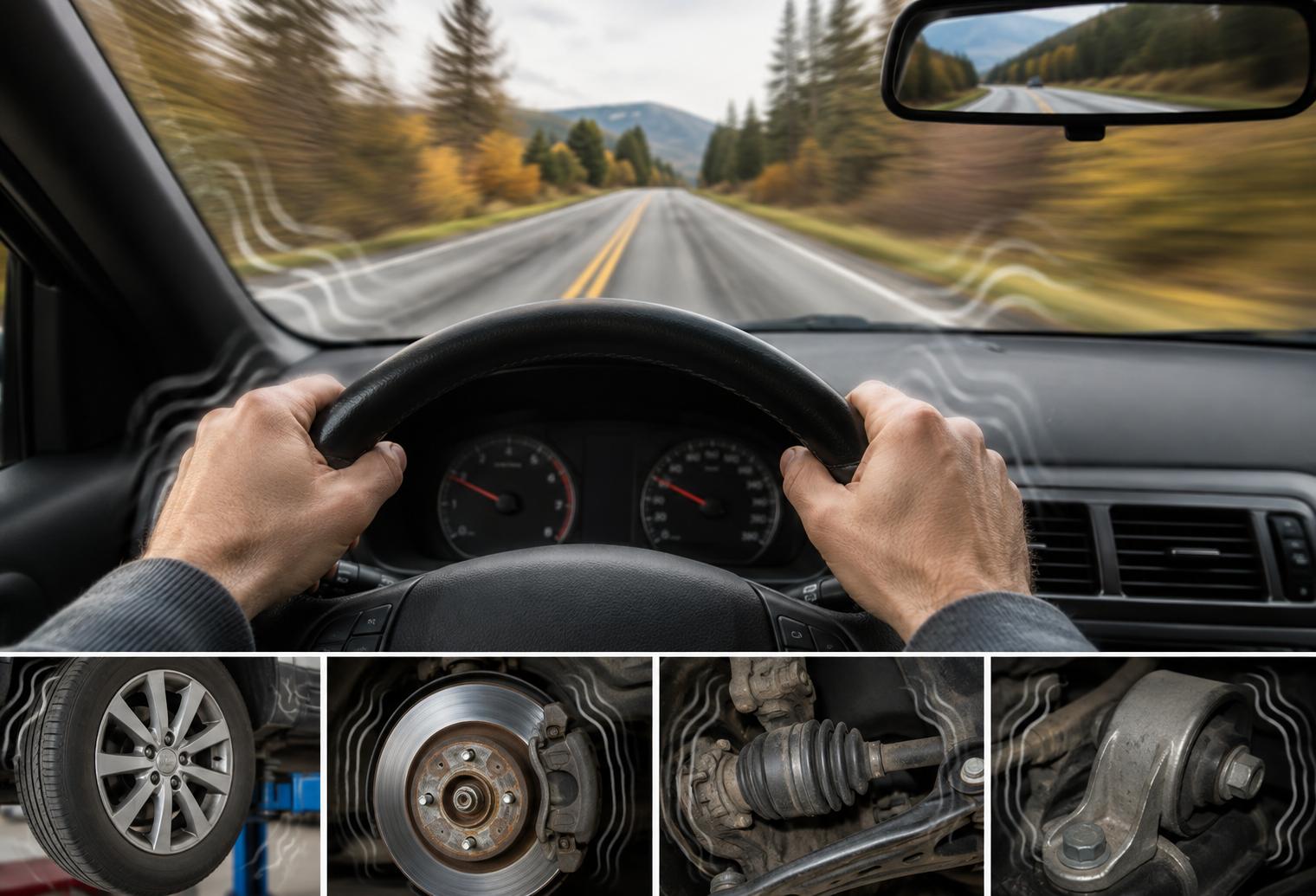
A car that starts shaking on the way across La Grande can turn an ordinary drive into an uncomfortable one quickly. Whether you notice vibration while traveling along Interstate 84, braking on city streets, or accelerating toward nearby Island City, the way the shaking occurs can provide useful clues about what is happening.
A car may shake while driving because of tire or wheel problems, worn suspension components, brake issues, engine problems, or drivetrain concerns. The speed and conditions under which the vibration appears are important. Shaking that happens only at highway speeds often points toward a different problem than vibration that occurs while braking, accelerating, or sitting at a stop.
What local drivers should know
-
A vibration that becomes stronger as speed increases can indicate a tire, wheel, or balance problem.
-
Rough pavement, temperature swings, winter driving, and road debris around Union County can contribute to tire and suspension wear.
-
Shaking while braking may point toward a brake system concern rather than a tire balance issue.
-
Vibration during acceleration can involve the engine, axles, mounts, or other drivetrain components.
-
A new or worsening vibration should not be ignored, especially before regular travel on Interstate 84 or mountain routes outside the Grande Ronde Valley.
Why Does a Shaking Car Matter for La Grande Drivers?
A shaking car matters because vibration can be an early sign of tire, steering, brake, suspension, engine, or drivetrain trouble that may worsen with continued driving. Around La Grande, drivers regularly move between city streets, highway speeds, rural roads, and mountain routes, making dependable steering, braking, and tire condition especially important.
Eastern Oregon driving can expose vehicles to changing road and weather conditions throughout the year. Winter temperatures, snow and ice, potholes, gravel, and seasonal road damage can all place additional stress on wheels, tires, steering parts, and suspension components.
At Integrity Automotive, we help local drivers determine where unusual vehicle vibrations are coming from so the underlying problem can be addressed rather than simply guessed at. Our goal is to identify what is actually causing the shake and explain the appropriate next step.
What Do Local Driving Conditions Tell Us About Vehicle Vibration?
Local driving conditions can make tire, wheel, and suspension-related vibration particularly noticeable because vehicles in the Grande Ronde Valley often transition between local streets, Interstate 84, rural roads, and mountain travel. A minor issue that is difficult to notice at 30 mph may become obvious once the vehicle reaches highway speed.
Rather than relying on a single local statistic, it is more useful to consider the conditions drivers routinely encounter. Winter travel around Union County may involve snow, ice, road treatments, potholes, and temperature changes. Trips toward Island City, Cove, Union, or the Blue Mountains can also include higher speeds and varying pavement conditions.
These conditions do not automatically cause a vehicle to shake, but they can expose an existing problem or contribute to wear over time.
How Can Vehicle Shaking Affect Local Drivers?
Vehicle shaking can affect steering control, braking feel, ride comfort, tire wear, and confidence behind the wheel. Depending on the cause, continuing to drive without an inspection may also allow a relatively limited repair to develop into wear on additional components.
For someone commuting around La Grande, a light steering wheel vibration may initially seem like an inconvenience. On a longer Interstate 84 drive, however, the same vibration can become stronger or more distracting.
Uneven tire wear can also reduce tire life. Worn suspension or steering parts may affect alignment and handling. Brake-related vibration can make braking feel inconsistent. The specific consequences depend on what is causing the shake, which is why diagnosing the source matters.
What Warning Signs Should La Grande Drivers Watch For?
Warning signs of a vibration problem include shaking that changes with speed, braking, acceleration, road conditions, or engine operation. Paying attention to exactly when the vibration occurs can help narrow down the likely system involved.
Watch for these signs:
-
The steering wheel shakes at highway speeds.
-
The vehicle vibrates strongly around a particular speed range.
-
The brake pedal or steering wheel pulses when braking.
-
The car shakes primarily while accelerating.
-
Vibration continues while the vehicle is stopped and the engine is running.
-
Tires show uneven, cupped, or unusual tread wear.
-
The vehicle pulls or feels less stable than usual.
-
A new noise, such as humming, clicking, clunking, or grinding, appears along with the vibration.
If shaking becomes severe or the vehicle feels difficult to steer or stop, continuing to drive may not be appropriate.
When Should You Have a Shaking Car Inspected?
A shaking car should be professionally inspected when the vibration is new, persistent, getting worse, or accompanied by steering, braking, tire, or mechanical symptoms. Drivers should be especially cautious when vibration is severe enough to affect vehicle control or when a tire appears damaged.
There are a few simple observations you can safely make yourself. Note whether the vibration happens at a particular speed, while braking, during acceleration, or even when parked. You can also visually inspect your tires for obvious low pressure, bulges, severe tread damage, or unusual wear.
Diagnosis beyond those basic checks usually requires professional inspection and testing. That is particularly true before regular highway or mountain driving outside La Grande, where higher speeds can make certain vibration problems more noticeable.
What Are the Most Common Causes of a Car Shaking While Driving?
The most common causes of a car shaking while driving include tire imbalance, tire damage, wheel problems, brake issues, worn suspension or steering parts, engine problems, and drivetrain concerns. The timing and location of the vibration often help separate one cause from another.
1. Tire imbalance
An imbalanced tire and wheel assembly is a common reason for vibration that appears or becomes stronger at higher speeds. Drivers may feel the shaking primarily through the steering wheel, seat, or floor.
A wheel can lose balance as tires wear or after changes involving the tire or wheel. Highway travel on I-84 may make this type of vibration easier to notice than slower driving around town.
2. Uneven or damaged tires
Tire problems can create vibration even when the wheel balance itself is not the main issue. Uneven tread wear, internal tire damage, flat spots, or other irregularities can all affect how smoothly a tire rolls.
Drivers around Union County should inspect tires periodically, particularly after hitting a significant pothole or road hazard.
3. Bent or damaged wheels
A wheel that has been bent or damaged may no longer rotate evenly. This can create a repeating vibration that changes with vehicle speed.
Potholes, curbs, and road impacts are possible sources of wheel damage. Sometimes the problem is obvious visually, while other wheel issues require closer inspection or measurement.
4. Brake system problems
If the shaking primarily occurs when you apply the brakes, the braking system deserves attention. Irregularities involving brake components can sometimes cause pulsation through the pedal, steering wheel, or vehicle.
Because braking performance is directly related to vehicle safety, persistent vibration during braking should be inspected rather than treated as a normal characteristic.
5. Worn steering or suspension components
Steering and suspension parts help keep the tires controlled and properly positioned against the road. Wear in these components can create looseness, vibration, uneven tire wear, or changes in handling.
Rough pavement and everyday mileage can gradually contribute to component wear. A technician may need to inspect multiple parts rather than assuming alignment alone will solve the problem.
6. Engine or ignition problems
A vehicle that shakes while stopped, idling, or accelerating may have a problem related to engine operation rather than the wheels.
Depending on the vehicle, rough running can result from several possible causes. If vibration is accompanied by poor acceleration, unusual engine behavior, or a warning light, engine diagnosis may be necessary.
7. Axle or drivetrain problems
Vibration that is especially noticeable during acceleration can sometimes originate from an axle, driveline, joint, mount, or another drivetrain component.
These problems can feel different from a typical tire imbalance because vibration may change based on throttle input rather than road speed alone. Identifying the source usually requires inspection of the vehicle under the appropriate operating conditions.
How Can La Grande Drivers Help Prevent Vehicle Vibration?
Drivers can reduce the likelihood of preventable vibration by maintaining proper tire pressure, rotating tires as appropriate, addressing alignment concerns, and inspecting the vehicle after significant road impacts. Regular auto maintenance also gives technicians an opportunity to notice wear before it becomes a noticeable shake.
Seasonal checks can be especially useful in Eastern Oregon. Before winter, inspect tire condition and pressure. After winter road conditions subside, pay attention to new vibrations, unusual tire wear, or steering changes that may have developed during months of rougher driving.
Safe DIY maintenance includes checking tire pressure and visually examining the tires. Wheel balancing, suspension diagnosis, brake inspection, alignment measurements, and drivetrain diagnosis should generally be handled with the proper equipment.
What Results Should You Expect After a Vibration Repair?
After the actual source of a vehicle vibration is repaired, drivers should expect the specific shaking associated with that problem to be reduced or eliminated. The exact repair and outcome depend on whether the cause involves tires, wheels, brakes, suspension, steering, the engine, or the drivetrain.
Some problems may require something relatively straightforward, such as correcting a wheel balance issue. Others may involve replacing a worn or damaged component.
The important step is accurate diagnosis. Replacing parts based solely on where a vibration seems to come from can lead to unnecessary repairs while leaving the real problem unresolved.
What Mistakes Do Drivers Commonly Make When a Car Starts Shaking?
The most common mistakes are assuming every vibration is caused by wheel balance, waiting until the shaking becomes severe, or replacing parts without confirming the source. A better approach is to observe when the vibration occurs and have the relevant systems inspected.
Mistake: Assuming the tires only need balancing.
Consequence: A suspension, brake, damaged tire, or drivetrain problem may remain unresolved.
Better approach: Diagnose the vibration based on speed, braking, acceleration, location, and related symptoms.
Mistake: Ignoring mild shaking for months.
Consequence: Some underlying problems can contribute to additional tire or component wear.
Better approach: Have new or persistent vibration evaluated before it becomes significantly worse.
Mistake: Getting an alignment without checking worn parts first.
Consequence: Alignment may not correct vibration caused by damaged or loose components.
Better approach: Inspect steering, suspension, tires, and wheels when the symptoms point in that direction.
Mistake: Continuing a long highway trip with severe vibration.
Consequence: The driver may be traveling at higher speeds with an unknown tire or mechanical issue.
Better approach: Stop and assess the vehicle if vibration suddenly becomes severe or affects control.
What Is a Common Local Car-Shaking Scenario?
A common local scenario is a driver who notices little or no vibration while traveling around town but feels the steering wheel begin to shake once the vehicle reaches Interstate 84 speeds. That speed-dependent pattern often directs attention toward the tires and wheels, although an inspection is still needed to confirm the cause.
Another common pattern is a vehicle that begins vibrating after winter driving or after a significant pothole impact. A driver may assume the road itself is causing the rough ride until the vibration continues on smoother pavement.
These are examples of symptom patterns, not diagnoses. The same sensation can have more than one possible cause.
What Services Can Help Correct a Vehicle Vibration?
The right service depends on the source of the vibration and may involve tire and wheel inspection, brake service, steering and suspension repair, engine diagnostics, or drivetrain evaluation. Proper diagnosis should come before selecting a repair.
At our shop, the first priority is determining when the vibration occurs and which vehicle systems are most likely involved. That information helps focus the inspection instead of relying on guesswork.
Should You Diagnose a Shaking Car Yourself or Call a Professional?
Drivers can safely perform basic visual checks, but professional diagnosis is usually the better choice for persistent vibration because several different systems can create similar symptoms. Tires, wheels, brakes, steering, suspension, engine components, and drivetrain parts can all produce shaking under different circumstances.
A basic tire pressure check is reasonable at home. So is noting when the vibration occurs.
Professional service becomes more appropriate when the vehicle needs to be lifted, wheels need to be balanced, brake components require inspection, suspension play must be checked, or engine and drivetrain systems need diagnostic testing.
For La Grande drivers who frequently use highway or rural routes, identifying the cause before extended driving can provide greater confidence that the vehicle is operating as intended.
What Areas Do We Serve Around La Grande?
Our primary focus is helping drivers in La Grande and the surrounding Grande Ronde Valley with automotive concerns such as unusual vibration and shaking. Drivers also travel into the area from nearby communities including Island City, Union, Cove, and other parts of Union County.
Because local motorists often move between town, rural roads, and Interstate 84, diagnosing problems under the conditions where they occur is especially helpful.
What Can Happen If You Ignore a Shaking Vehicle?
Ignoring a shaking vehicle can allow tire wear, suspension problems, brake concerns, or other mechanical issues to continue developing. The eventual cost depends entirely on the cause, but waiting may mean additional components experience unnecessary wear.
A mild vibration does not automatically indicate an emergency. However, a vibration that becomes stronger, changes suddenly, affects steering or braking, or appears alongside unusual noises deserves timely attention.
For drivers heading through the Blue Mountains or regularly traveling I-84, dealing with an unexplained vibration before a longer trip is a practical precaution.
Frequently Asked Questions About Cars Shaking in La Grande
Why does my steering wheel shake at highway speeds in La Grande?
Steering wheel shaking at highway speeds often points toward a tire or wheel-related issue, such as imbalance, uneven tire wear, or wheel damage. Because Interstate 84 allows sustained higher-speed driving near La Grande, a vibration that is barely noticeable around town may become much easier to feel once speed increases.
Why does my car shake when I brake?
A car that shakes primarily when braking may have an issue involving the braking system, although suspension or wheel concerns can sometimes contribute to similar symptoms. Pay attention to whether the brake pedal pulses, the steering wheel moves, or the entire vehicle vibrates. Persistent brake-related shaking should be professionally inspected.
Can potholes around Union County make my car vibrate?
A hard pothole impact can damage a tire or wheel or contribute to alignment and suspension concerns that may result in vibration. Not every pothole causes damage, but if shaking begins immediately after a significant impact around Union County, a tire, wheel, steering, and suspension inspection is a sensible next step.
Why does my car shake when accelerating out of La Grande?
Shaking during acceleration can point toward engine, mount, axle, joint, or other drivetrain problems rather than a simple wheel balance issue. The exact cause depends on how the vibration changes with vehicle speed and throttle input. A technician can use those symptoms to determine which components need closer inspection.
Can cold Eastern Oregon weather cause tire vibration?
Cold weather can change tire pressure and may make certain existing tire or wheel problems more noticeable, but cold temperatures alone do not explain every vibration. La Grande drivers should check tire pressure as temperatures change and have persistent shaking inspected rather than assuming the weather is the only cause.
Should I drive on I-84 if my car is shaking?
Whether you should continue driving depends on the severity and cause of the vibration. Mild shaking still deserves attention, while severe vibration, tire damage, steering changes, or braking problems may make continued highway driving inappropriate. Higher speeds on I-84 can also make an existing vibration considerably more noticeable.
Can an alignment fix a shaking car?
An alignment can correct certain wheel-angle problems, but it does not fix every cause of vehicle vibration. A tire imbalance, damaged tire, bent wheel, worn suspension part, brake issue, or drivetrain problem may require a different repair. The vehicle should be inspected so the service matches the actual cause.
How soon should I get a new vibration checked in La Grande?
A new vibration should be checked promptly if it persists, becomes worse, or affects steering, braking, or vehicle stability. La Grande drivers who regularly commute on I-84, travel rural roads, or head into the Blue Mountains may want to address unexplained shaking before putting additional highway miles on the vehicle.
Get Your Vehicle Driving Smoothly Again in La Grande
An unexplained shake does not tell you exactly which part has failed, but it does tell you that something deserves attention. Understanding when the vibration occurs is the first step toward finding the real cause.
At Integrity Automotive, we can help identify the source of vehicle vibration and determine the appropriate repair for your car.