
Signs of a Failing Alternator and How It Differs From a Bad Battery
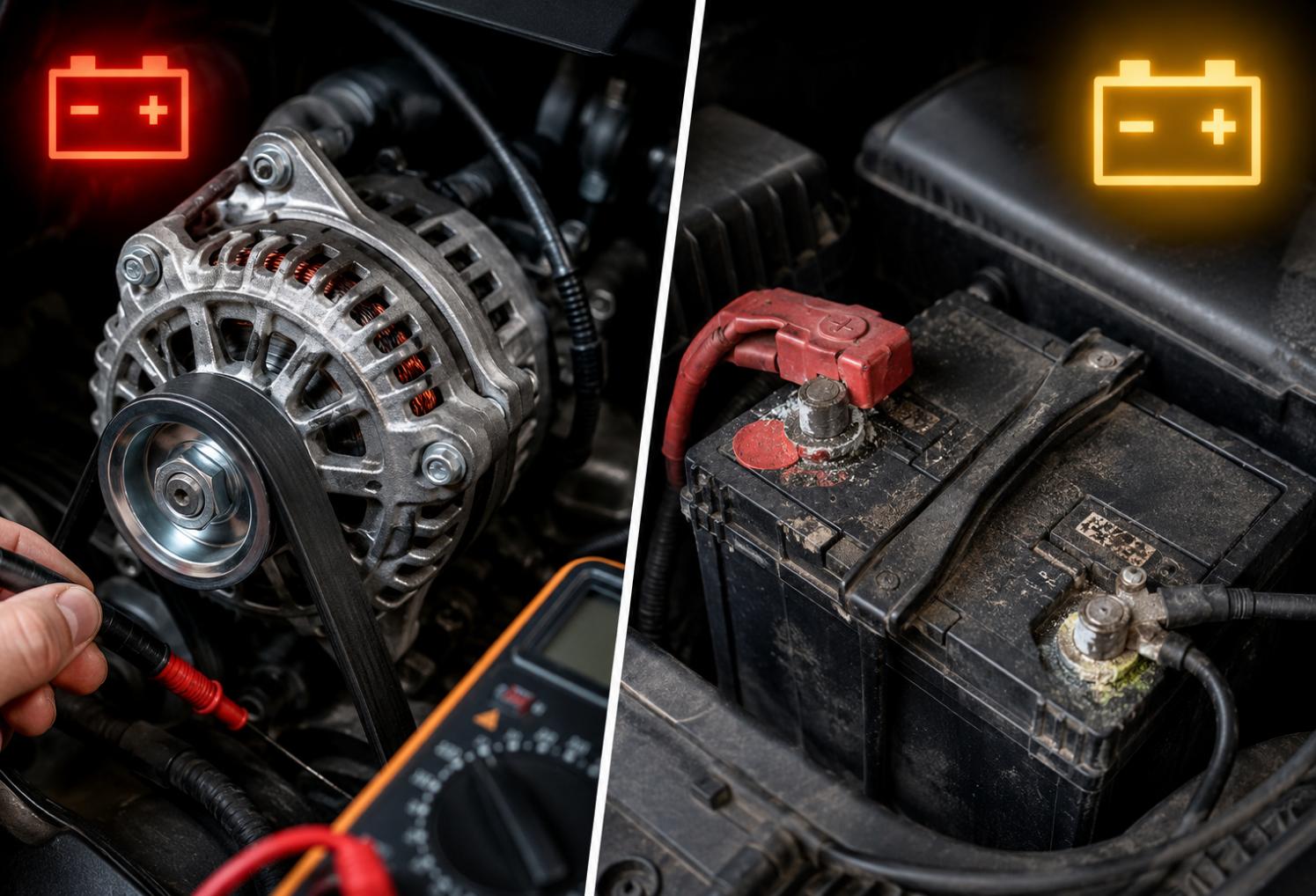
A car that struggles to start on a cold Northeast Oregon morning can make the battery seem like the obvious culprit. But if the lights are flickering, electrical accessories are acting strangely, or the vehicle dies after starting, the alternator may actually be responsible.
Quick answer: A bad battery usually causes trouble starting the engine because it cannot store or deliver enough electrical power. A failing alternator causes problems after the engine starts because it is responsible for supplying electricity and recharging the battery while you drive. Since the symptoms can overlap, testing both components is the most reliable way to identify the problem.
What La Grande drivers should know
-
A slow or unsuccessful start often points toward the battery, but it does not automatically rule out the alternator.
-
Headlights that dim or change brightness while driving can indicate a charging-system problem.
-
Cold Northeast Oregon weather can expose a battery that has already lost capacity.
-
Drivers traveling I-84 or other routes through Union County should take charging-system warnings seriously because a failed alternator can eventually cause the engine to shut down.
-
Battery and alternator testing can prevent replacing a good component while leaving the actual problem unresolved.
Why Alternator and Battery Problems Matter in La Grande
Alternator and battery problems matter in La Grande because a charging-system failure can leave a vehicle unable to start or continue running, potentially far from a convenient stopping point. That is especially worth considering when your routine includes Interstate 84, Highway 30, Highway 82, or trips between communities across Union County.
Union County identifies I-84 as its primary east-west transportation route and also recognizes Highways 30, 82, 203, 204, and 237 as important connections between area communities.
For drivers traveling between La Grande, Island City, Union, Cove, Imbler, or Elgin, dependable starting and charging systems are more than a matter of convenience. Integrity Automotive helps local drivers diagnose vehicle problems so the repair can address the actual source of the symptoms. From here on, we will explain what to watch for and how battery and alternator problems differ.
Local Conditions Can Expose Charging-System Problems
Local driving conditions can make an already weak battery or charging system more noticeable, particularly during cold weather, seasonal temperature changes, and longer trips through Northeast Oregon. The battery and alternator have different jobs, but problems with either one can affect the entire electrical system.
The National Weather Service describes the nearby Blue Mountains as significantly higher terrain, and winter conditions are part of normal life throughout the region. Cold starts place greater demands on a vehicle’s battery, which can reveal declining battery performance.
Driving patterns matter too. Someone making short trips around town may notice repeated starting trouble, while a driver headed across the Grande Ronde Valley or through the Blue Mountains may first notice electrical symptoms after the engine is already running.
What Are the Signs of a Failing Alternator?
Signs of a failing alternator include a charging-system warning light, dim or flickering lights, malfunctioning electrical accessories, unusual noises, repeated battery problems, and an engine that eventually stalls. Because the alternator powers electrical systems while the engine runs, symptoms often become noticeable during the drive rather than only at startup.
Watch for these common warning signs:
-
Battery or charging warning light: A dashboard battery symbol can indicate a charging-system problem, not necessarily a bad battery.
-
Dimming or flickering headlights: Changing light output while the engine runs can indicate unstable electrical supply.
-
Electrical accessories behaving strangely: Windows, dashboard electronics, climate-control blowers, or other powered equipment may operate inconsistently.
-
A battery that repeatedly goes dead: A healthy battery cannot remain charged if the alternator is not replenishing its power properly.
-
Unusual noises near the belt drive: Bearing, pulley, or belt-related problems can sometimes accompany alternator trouble.
-
Burning smells: Electrical or belt-related odors deserve prompt attention.
-
Stalling after the vehicle starts: Once stored battery power is depleted, a vehicle with a failed charging system may stop running.
If these symptoms appear while driving around La Grande or before a longer trip on I-84, having the charging system checked can help determine whether the alternator, battery, connections, belt drive, or another component is responsible.
How Is a Bad Battery Different From a Bad Alternator?
A bad battery primarily struggles to store and deliver the power needed to start the vehicle, while a bad alternator struggles to produce electricity and recharge the battery once the engine is running. The symptoms overlap because an alternator problem can eventually drain and weaken the battery.
A weak battery commonly causes slow cranking, clicking when the key is turned, or a no-start condition. If the vehicle starts after a jump and then continues operating normally, the battery deserves attention, although further testing is still appropriate.
Alternator trouble often shows itself after startup. Lights may fluctuate, accessories may lose power, a warning light may appear, or the engine may eventually stop.
Avoid relying on one symptom alone. Testing the battery and charging output provides much better information than guessing.
When Should You Call an Automotive Professional?
Professional diagnosis is appropriate when a vehicle repeatedly needs a jump, shows a charging warning light, loses electrical power while running, stalls unexpectedly, or develops recurring battery problems. These symptoms can have several causes, and proper testing helps separate a worn battery from alternator, belt, wiring, terminal, or connection problems.
Drivers can safely look for obvious issues such as loose or heavily corroded battery terminals with the vehicle off. Beyond basic observation, charging-system diagnosis is usually better handled with appropriate testing equipment.
If a vehicle begins losing power while traveling through Union County, do not assume you have enough battery reserve to reach your destination. A severely undercharging alternator can eventually leave the vehicle without enough electrical power to continue running.
What Commonly Causes Alternator and Battery Problems?
Common causes of charging and starting problems include normal component wear, weak batteries, poor electrical connections, belt or pulley issues, and faults elsewhere in the charging system. Seasonal temperature changes and the demands of regular driving around Northeast Oregon can make existing weaknesses easier for drivers to notice.
A battery naturally loses performance as it ages. Corroded or loose terminals can also interfere with starting and charging.
Alternators contain internal electrical and mechanical components that can wear. Because the alternator is belt-driven on most vehicles, problems involving the belt, tensioner, or pulley can also affect charging performance.
This is why replacing the battery simply because it is dead is not always the right solution. The battery may be the victim of a charging problem rather than its cause.
How Can La Grande Drivers Help Prevent Unexpected Charging Problems?
La Grande drivers can reduce the chance of an unexpected no-start or charging failure by paying attention to slow starts, warning lights, battery condition, electrical changes, and recurring symptoms before longer regional trips. Preventive testing is particularly useful before winter or when a vehicle has shown intermittent electrical trouble.
Check that battery terminals appear secure and free from severe corrosion. Pay attention to whether starting speed changes from one morning to the next. Do not ignore a battery warning light simply because the vehicle still seems to drive normally.
Before heading toward the Blue Mountains or making regular drives between La Grande and surrounding Union County communities, resolving known charging-system symptoms can reduce the chance of becoming stranded away from town.
What Results Should You Expect From Proper Diagnosis?
Proper charging-system diagnosis should identify whether the battery can hold and deliver adequate power, whether the alternator is charging correctly, and whether another part of the electrical system is contributing to the symptoms. The goal is to determine the cause before deciding which component actually needs service.
At our shop, diagnosis can help separate similar symptoms instead of treating every no-start as a battery failure. Depending on what testing finds, the appropriate solution could involve the battery, alternator, electrical connections, belt-drive components, or another issue.
What Mistakes Should Drivers Avoid?
The biggest mistakes are assuming every dead battery needs replacement, ignoring charging warning lights, and continuing to drive when electrical systems are losing power. These choices can lead to unnecessary parts replacement or leave a driver stranded somewhere between La Grande and another Northeast Oregon community.
Mistake: Replacing the battery without testing the charging system.
Consequence: A faulty alternator may drain the replacement battery too.
Better approach: Test the battery and charging system before choosing a repair.
Mistake: Assuming a successful jump-start proves the battery is bad.
Consequence: The underlying charging problem may remain.
Better approach: Treat the jump as a way to get the vehicle running, not as a complete diagnosis.
Mistake: Ignoring flickering lights or a charging warning.
Consequence: Available electrical power may continue dropping.
Better approach: Arrange testing before depending on the vehicle for another long drive.
What Is a Common Local Charging-System Scenario?
A common local scenario is a vehicle that starts poorly on a cold morning, receives a jump, and then develops additional electrical symptoms during later drives. The owner may assume the battery is the entire problem, even though the charging system could be responsible for the battery repeatedly losing power.
Consider a driver commuting between Island City and La Grande. After a jump-start, the vehicle seems fine at first. Later, the dashboard warning light appears and the headlights begin behaving differently.
That is not a case study or a claim about a specific customer. It illustrates why testing both the battery and alternator is preferable to diagnosing the vehicle based solely on the first symptom.
Should You Replace the Battery or Alternator?
Whether you need a battery or alternator depends on test results, because replacing either component without confirming the failure can waste money and leave the underlying problem unresolved. Battery replacement makes sense when the battery fails appropriate testing, while alternator service is appropriate when charging output or related diagnosis identifies an alternator fault.
DIY observation can help you recognize a problem, but professional testing is the stronger option when symptoms overlap. This is especially true with repeated dead batteries, warning lights, stalling, or inconsistent electrical operation.
What Happens If You Ignore a Failing Alternator?
Ignoring a failing alternator can eventually leave the battery discharged and the vehicle unable to keep running, turning an electrical warning into a roadside breakdown. For drivers using I-84, Highway 82, or rural routes around the Grande Ronde Valley, dealing with warning signs early can be much easier than handling a disabled vehicle away from town.
Continuing to drive also does not reveal which component is actually faulty. Testing can provide the information needed to make a repair decision before the problem becomes more disruptive.
Where Do We Help Local Drivers?
We serve drivers in La Grande and the surrounding Northeast Oregon area who need help identifying starting, battery, charging, and other automotive problems. Nearby Union County communities include Island City, Cove, Union, Imbler, Elgin, Summerville, and North Powder, with regional roads connecting drivers throughout the Grande Ronde Valley.
Frequently Asked Questions
How can I tell if my alternator or battery is bad in La Grande?
The timing of the symptoms provides a useful clue, but testing is the best way to know. A battery problem often appears when starting the engine, while alternator trouble commonly causes electrical problems after the engine is running. Because either failure can affect the other component, both should be evaluated when symptoms overlap.
Can a bad alternator make a good battery go dead?
Yes, a failing alternator can leave a good battery discharged because the battery is not being adequately recharged while the engine runs. Repeatedly jump-starting the vehicle does not correct that underlying charging problem. If your battery keeps dying around La Grande, testing the entire starting and charging system can help identify why.
Why does my car start after a jump but die later?
A vehicle that starts with a jump but later dies may have a charging-system problem, although that symptom alone does not prove the alternator has failed. If the alternator cannot provide sufficient electrical power, the vehicle can run from stored battery energy until that reserve becomes too low to support operation.
Can cold weather cause battery trouble in Northeast Oregon?
Cold weather can make weakness in a vehicle battery more apparent because starting the engine places significant demand on the battery. Around La Grande and the wider Blue Mountain region, drivers should pay particular attention to slower cranking or repeated starting problems as temperatures fall rather than waiting until the vehicle will not start.
Is the battery dashboard light always a bad battery?
No, the battery-shaped dashboard warning light generally points to a charging-system issue rather than automatically identifying the battery itself as faulty. If that warning appears while driving through La Grande or elsewhere in Union County, the alternator, charging circuit, belt drive, connections, and battery may need evaluation.
Is it safe to drive with a failing alternator?
Driving with a suspected failing alternator is risky because the vehicle may eventually lose enough electrical power to stall and not restart. That is particularly inconvenient on stretches of I-84 or rural Union County roads. If warning lights and electrical symptoms are appearing together, arranging diagnosis promptly is the safer choice.
Should I replace my battery when replacing an alternator?
Not automatically, because the battery should be evaluated on its own condition rather than replaced solely because the alternator failed. A charging problem can deeply discharge a battery, but testing can help determine whether that battery remains serviceable or has also deteriorated enough to require replacement.
When should I have my charging system checked in La Grande?
Have the charging system checked when you notice repeated dead batteries, slow starting, charging warning lights, flickering lights, electrical irregularities, or unexplained stalling. Testing is also worth considering before relying on a vehicle for winter driving or regular travel between La Grande and surrounding Northeast Oregon communities when symptoms have already appeared.
Get Your Vehicle Ready for the Road in La Grande
A weak battery and a failing alternator can produce similar symptoms, but they require different solutions. We can help identify the source of starting and charging problems so you can make an informed repair decision and get back on the road with confidence.